Aslan–Tash opposition
The Last BattleThe Aslan–Tash opposition is the distinction between the true protector of Narnia and the feared god invoked by its Calormene enemies. The Ape’s assertion that they are one is not a reconciliation between two faiths but a political deception: its purpose is to confuse the Narnians and consolidate control. The conspiracy’s private atheism, Tash’s actual arrival, and Aslan’s direct command to drive him away expose the lie. In the final judgment, the contrast between the two is also a question of allegiance and moral recognition.
The claim that erases the distinction
The question is first put with disarming clarity by a young Lamb. The Calormenes belong to Tash, he says, while the Narnians belong to Aslan; if Tash accepts human sacrifice, how could Aslan be his friend? The assembled Talking Beasts recognize that this is the best question anyone has asked. The Ape answers not by explaining the contradiction, but by spitting at the Lamb and belittling him as a child. He then declares that Tash is only another name for Aslan, that the different peoples use different words for the same being, and that there can therefore be no quarrel between them.
The response makes the slogan “Tash is Aslan: Aslan is Tash” an instrument of rule. It collapses the difference between the Narnians’ allegiance and the Calormenes’ worship while legitimizing the Ape’s account of events. The Beasts do not receive the claim as a convincing answer: their faces become bewildered and sorrowful. Yet the false authority surrounding it has consequences beyond the meeting. Two Mice later report that everyone says Aslan ordered the enslavement of Narnia’s people and the killing of the Wood-Nymphs. They had hoped for Aslan’s return, but now believe he may be punishing them for an unknown wrong. Their despair shows how the counterfeit account turns violence into an apparent command from the very figure they trust.
The conspirators’ private meaning
The apparent theological compromise is exposed as calculated deception when a Dwarf recounts overhearing Ginger and Rishda Tarkaan after a midnight meeting. Ginger asks what Rishda meant by saying that Aslan means no more than Tash. Rishda confirms that he means neither being exists. Ginger understands that this is the truth they share, while the Ape is only a greedy tool whom the conspirators intend to use. They plan to draw in Narnians who care only for profit and possible rewards under Calormene rule, because those who genuinely believe in Aslan might turn against the scheme if the Ape’s folly reveals it.
This private conversation reverses the public claim’s apparent meaning. The Ape presents the names as two cultural expressions of one god; Ginger and Rishda use that formula while believing in neither. For them, the slogan is not an account of divine unity but cover for political control. Their separation of the credulous from the self-interested also shows why the deception works unevenly: it exploits the Beasts’ trust, while offering its human and feline collaborators material advantage. The opposition is not erased in their minds; it is deliberately concealed from those whose belief might resist them.
Tash’s arrival and Aslan’s answer
Emeth’s demand for consistency brings the contradiction into the open. Believing the Ape’s claim, he argues that if Tash and Aslan are one, then Tash must be present inside the Stable; he longs to see Tash, even at the cost of a thousand deaths. When Rishda dismisses his question as beyond his understanding, Emeth asks whether the Ape has lied. The Ape insists that the two are one, and Emeth demands that he swear it. The scene makes the scheme’s central assertion answerable to an actual presence rather than leaving it as propaganda.
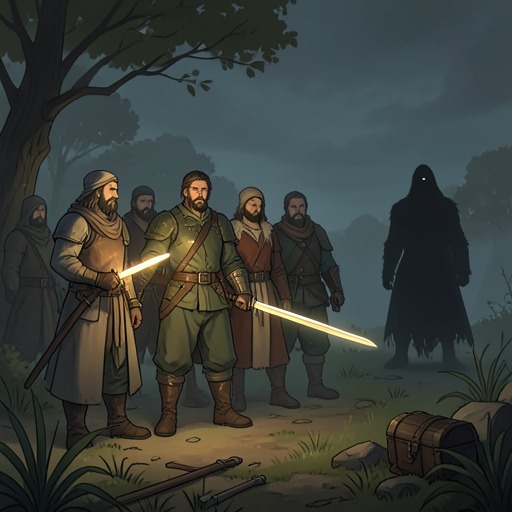
When Tash appears, Rishda is afraid, and the creature takes him. A voice then orders Tash to depart and take his lawful prey to his own place, speaking in the name of Aslan and Aslan’s great Father, the Emperor-over-sea. Tash vanishes with Rishda. The episode supplies the decisive narrative answer: Aslan and Tash are not interchangeable names for one being. They have distinct identities, and Aslan’s command establishes an opposition in which Tash’s claim over Rishda is acknowledged as belonging to his own place, not to Aslan’s authority.
Judgment and the end of the old Narnia
The distinction continues into the final judgment beyond the Stable Door. As creatures come before Aslan, their encounter with his face divides them. Some look with fear and hatred; Talking Beasts among them cease to be talking animals and pass into Aslan’s shadow. Others, though some are frightened, love him and enter through the Door. The scene presents recognition and response, rather than a verbal claim of religious sameness, as the decisive test. Its pattern also recalls the earlier deception: the slogan that erased meaningful differences gives way to a judgment in which each creature’s response has a consequence.
Aslan’s work of ending the old world extends the conflict beyond the defeat of the conspirators. He calls the stars home, tells the Time-giant to make an end, and the giant extinguishes the sun. The destruction is not depicted as Tash’s victory or as proof that Aslan has abandoned Narnia. When Lucy grieves for the country, Tirian says that mourning is fitting: Narnia was the only world he had known, and its death deserves sorrow. Digory explains that the Narnia they have lost had a beginning and an end and was a shadow or copy of the real Narnia, which has always existed and will always exist. Aslan later reveals that the railway accident was real and that the children are dead in the Shadow-Lands; the end of one world is the beginning of the real story. The opposition between Aslan and Tash thus belongs to a larger contrast between counterfeit authority and truth, and between the ending of a finite world and entry into Aslan’s enduring country.